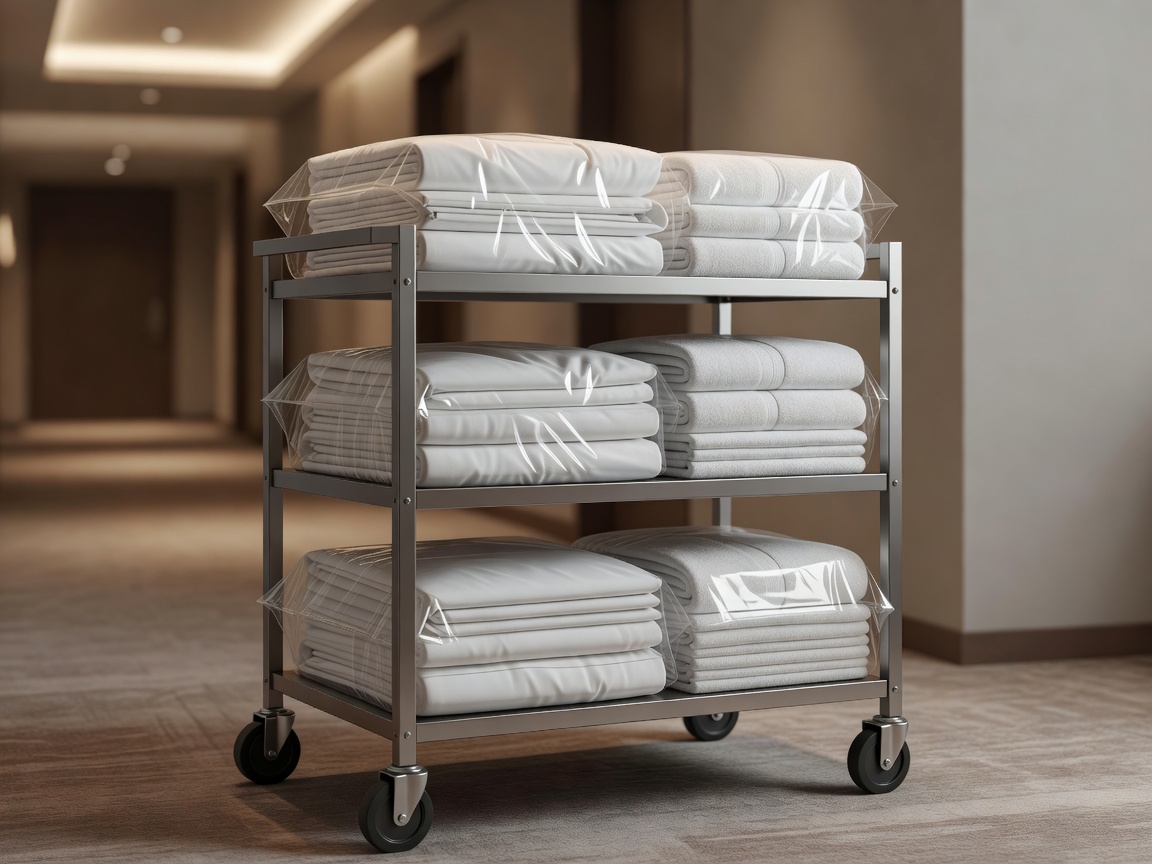
Distinguish folded from approved
A neat stack can contain a stained, damaged or incorrectly processed item. Finishing gives linen its intended presentation; release establishes whether it can return to service under the operation’s rules. Define the checks required for each category and who can authorise release. Visual inspection can identify some defects, but appearance alone does not establish microbiological condition or validate a laundry process.
Separate rewash, repair and withdrawal decisions. A persistent stain may need a different review from a torn seam, and an unresolved process record may affect an entire batch rather than one item. Keep held stock physically distinguishable from ready stock. If the inventory system counts both as available, housekeeping can face a shortage even when the reported total appears comfortable.
Protect the route after processing
Clean textiles need suitable handling, containers and storage conditions. The specific controls depend on the risk assessment and service requirements, but the principle is consistent: avoid reintroducing contamination during movement. Define how carts are cleaned, how their status is identified and whether covers or other protection are required. A cart’s appearance is not a reliable record of its previous use.
Map lifts, corridors, loading bays and storage rooms as part of the route. Where clean and soiled movements share infrastructure, establish separation arrangements that are practical and documented. Do not let automation create an exception simply because a vehicle can navigate a shortcut. The destination must also be ready: protected stock loses its advantage if it is unloaded into an unsuitable holding area.
Count availability by place and condition
A hotel may own plenty of linen while a particular floor has none of the required sheet size. Useful stock visibility distinguishes category, location, condition and allocation. Stock on a delivery vehicle is not yet in a floor cupboard. Items reserved for another property are not freely available. A record of the last scan should not be presented as a continuously verified position.
RFID and barcode systems can support counting and movement records when their coverage and operating procedures are understood. GS1 standards can help structure identifiers, but choosing an identification framework does not guarantee accurate inventory. Define when a count changes, how manual movements are entered and how discrepancies are reconciled. Periodic physical checks remain valuable, especially after returns, repairs or changes in working practice.
Make the receiving handoff explicit
Delivery planning should reflect housekeeping demand, room turnover patterns and the access conditions of the property. Autonomous mobile robots or guided transport may suit some routes, but lifts, doors, pedestrian traffic and cart interfaces need assessment. A transport robot does not automatically unload a shelf or confirm that the correct linen size reached the intended cupboard. Define the exact task and its endpoint.
At delivery, confirm the receiving location and any required acceptance step. If nobody can receive the load, the system needs an authorised waiting or return route. Blocking a fire route or leaving stock in an uncontrolled corridor is not an acceptable completion state. In mixed human-and-robot areas, navigation behaviour, training and safe interaction require competent site assessment rather than assumptions based on a demonstration elsewhere.
Return useful information with the next load
The linen loop is also a feedback loop. Housekeeping may notice premature wear, repeated size mismatches or stains not visible during finishing. Provide a clear route for reporting the category, location and nature of the problem without adding guest-identifying information. Connect recurring issues to procurement, sorting, processing or handling review rather than treating every rejected item as an isolated complaint.
Review losses and withdrawals with the same care. An item absent from a read zone is not necessarily lost; it may be held, repaired or stored elsewhere. Reconcile the operational explanation before making replacement decisions. Consider linen life and repairability alongside availability, using the manufacturer’s instructions and applicable process constraints. Automation should improve the quality of those decisions rather than merely accelerate purchasing.
A practical review ends with a physical walk: select a released batch, follow its container and confirm that housekeeping can access the right items in the expected condition. Then trace an exception in reverse. If both routes remain understandable to the people involved, the laundry system is supporting hotel service rather than just moving textiles.
Describe a return handoff you want to improve →Further operational context
Use GS1 for identification principles, the Health and Safety Authority for Irish workplace guidance, and the UK Health and Safety Executive for additional machinery and workplace transport guidance. Check which jurisdiction and requirements apply to your site.