Keep the collection context
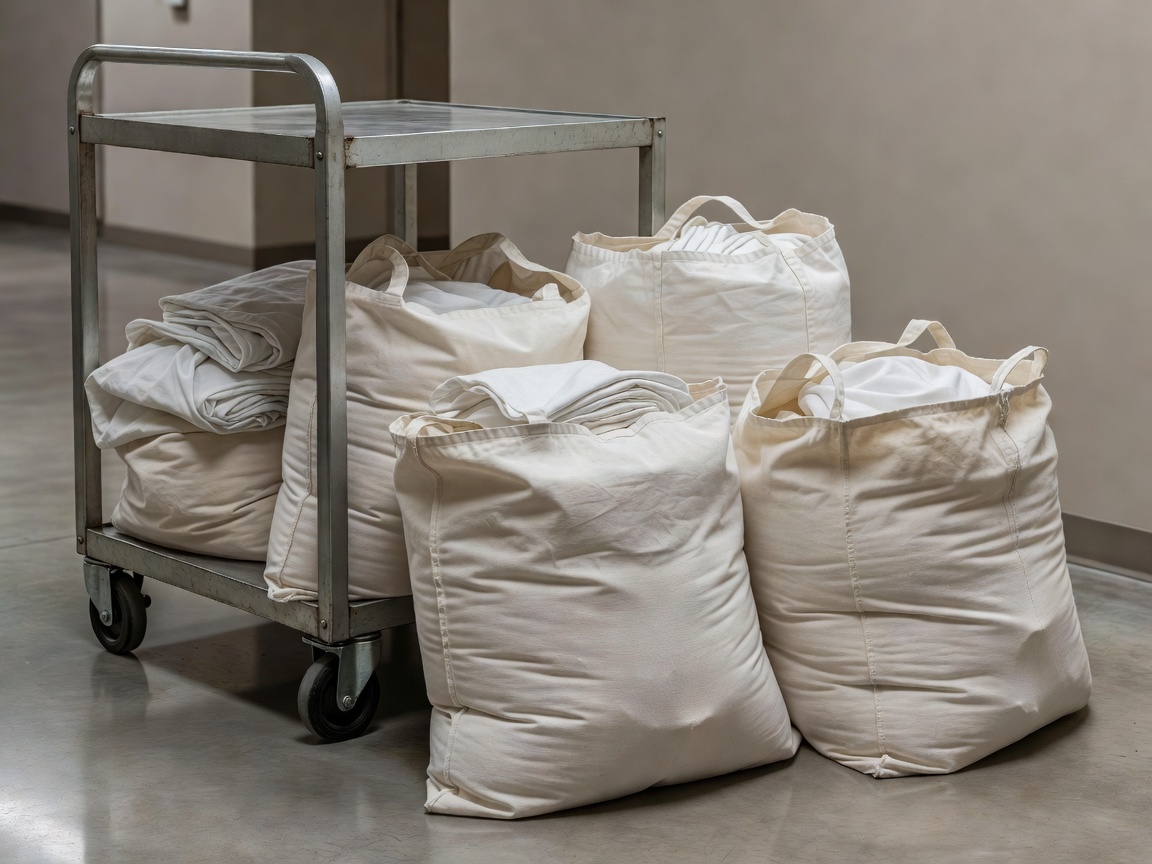
Hotel linen begins its return journey in guest rooms, bathrooms, restaurants and service areas. Those sources can produce very different loads. A bag containing bed sheets should not automatically follow the same route as kitchen cloths or textiles with a special contamination concern. Collection instructions should identify the handling category before receiving staff or automated equipment open the load.
At receiving, confirm the source, container condition and destination. Keep soiled containers within the designated receiving route. Where an external laundry serves several properties, ownership is another necessary distinction. A missing label should create a visible exception rather than an assumption. The purpose is to preserve useful context before individual items disappear into a larger batch.
Give each sensor a defined question
Radio-frequency identification, or RFID, can associate a tagged item with an identifier when the tag is readable and the installation is correctly configured. It does not directly establish cleanliness, stain severity or fabric condition. A camera can support classification by shape, colour or visible features, but overlapping items and inconsistent lighting complicate the task. Weighing provides load information without identifying every textile.
These methods answer different questions. Combining them can expose disagreements, but adding sensors does not remove the need for decision rules. Specify what happens when the expected item count differs from the observed count. A reader detecting a nearby cart should not silently allocate that cart’s contents to the current batch.
| Method | Useful for | Still needs checking |
|---|---|---|
| RFID | Tagged identity and ownership | Read-zone accuracy, missing tags, condition |
| Machine vision | Visible textile categories and presentation | Occlusion, mixed items, lighting changes |
| Weight | Batch loading and transfer reconciliation | Moisture, composition and item count |
| Manual inspection | Ambiguous or unusual items | Consistent rules and safe access |
Sort for the process that follows
A recognised textile still needs an approved route. Fibre composition, colourfastness, soil category, finishing requirements and manufacturer care instructions influence whether items can share a process. A sorting system should apply the laundry’s validated categories rather than invent a wash recipe from appearance. ISO 3758 provides a framework for textile care symbols; interpreting a particular item still requires its actual instructions.
Capacity decisions also matter. Equipment has operating limits, and an uneven or unsuitable load can create downstream difficulties. Measure the load in the way the equipment supplier specifies. Do not infer a dry textile quantity from a wet incoming mass without an appropriate method. Keep batch identity available as material moves toward washing, especially where ownership or special handling must remain traceable.
Make the uncertain route deliberate
Foreign objects, damaged bags and unusual contamination need a route designed around staff safety. Define who may open or inspect a load, what protective measures apply and where it can wait without blocking normal production. Equipment should not compact, shake or feed an uncertain item simply to maintain flow. Follow the site’s exposure and incident procedures for sharps or other hazardous discoveries.
Operational uncertainty deserves a separate response from a confirmed hazard. An unreadable identifier may need relabelling; an unknown textile may require care-instruction review. Record the reason for diversion so recurring problems are visible. If several operators resolve the same problem differently, the rule is not yet clear enough for reliable automation.
Test the transfer, not a perfect sample
A meaningful sorting trial includes the variation the hotel actually generates: mixed sizes, aged stock, damp towels, missing tags and busy receiving periods. Agree the classification categories before testing. Compare the system’s decisions with an independently checked sample, and record uncertain cases instead of forcing them into a success category. Identify which errors would damage stock, disrupt hygiene controls or send a load to the wrong owner.
Finish by checking the physical handoff. Does the chosen item reach the correct container? Can staff remove a diverted item safely? Does the next machine receive the same batch identity? A correct classification on a screen is only useful when the material follows it. Once that connection is dependable, the next question is whether the textile can be presented for a workable grip.
Continue to robotic textile handling →Reference points for your review
Consult the current editions and applicable scope of ISO 3758 and ISO 15797 through ISO, and EN 14065 through your national standards body, such as NSAI. ISO 15797 concerns industrial washing and finishing test procedures for workwear; it should not be presented as a hotel-linen hygiene certification.